Phthalic anhydride appears as a white lustrous solid in the form of needles with a mild distinctive odor. Moderately toxic by inhalation or ingestion and a skin irritant. It forms a corrosive solution when mixed with water. Used in the manufacture of materials such as artificial resins. Phthalic anhydride is the cyclic dicarboxylic anhydride that is the anhydride of phthalic acid. It has a role as an allergen. It is a cyclic dicarboxylic anhydride and a member of 2-benzofurans.
Used in the manufacture of plasticizers, polyester and alkyd resins, dye intermediates, food preservatives, pharmaceuticals, insect repellants and perfume fixatives.
Synonyms: 1,3 Isobenzofurandione; 1,3 Dixophthalan; 1,2 Benzenedicarboxylic acid anhydride; Phthalic acid anhydride; 1,3-Isobenzofurandione
Cas Number: 85-44-9
Appearance: white flake
Odor: acrid odor
Molecular Weight: 148.11 g/mol
PH: 1.37 – 1.94 at 95 °C
Boiling Point: 284 °C
Flash Point: 151 °C Closed Cup
Vapor Pressure: 0.001 mmHg @ 30 °C
Melting Point: 131 °C
Autoignition Temperature: 570 °C
Viscosity: 6.4 mPa.s 197 °C
Bulk Density: 1.53 lb/gal

Phthalic Anhydride
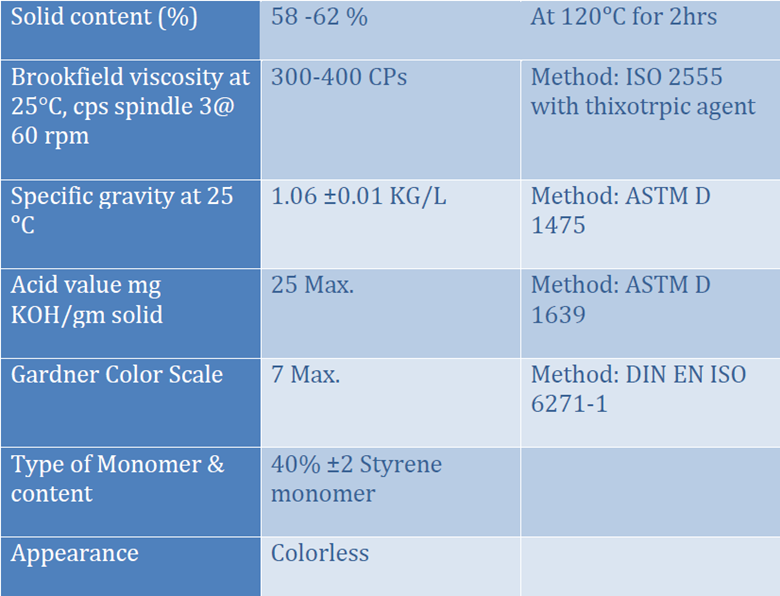

Curing properties are those obtained using 2% Cobalt Octoate (1% cobalt metal) & 2% MEK Peroxide (M50) in 100 grams of resin previously stabilized at 25°C.
Storage: In Drums/ IBC’s: Product should be kept in temperature below 25°C. Direct heat sources such as sun light must be avoided as it decreases product’s shelf life. drums or tanks should be kept well sealed to avoid moisture or monomer loss.
Annual Production: 9,000 tons.
=